Utah’s trails are for everyone—but not everyone moves the same way. Whether you’re hiking, biking, or riding horseback, knowing who yields to whom helps prevent collisions, reduce stress, and keep the vibe on the trail friendly and safe.
Right of way isn’t about trail superiority—it’s about momentum, visibility, and respecting the people (and animals) sharing the space with you.
Below, we break down the most common trail user interactions and what to do when paths cross.
Hikers & Bikers
Who has right-of-way?
Bikers should yield to hikers, but hikers may sometimes step aside for efficiency
Why?
Since mountain bikes are considered more maneuverable than hikers’ legs, bikers are generally expected to yield to hikers on the trail. However, because those mountain bikes are often moving considerably faster than said legs, it’s usually easier for hikers to yield the right of way—especially if a mountain biker is huffing and puffing up a tough incline. A biker should never expect a hiker to yield, though.
Because mountain bikers move faster, hikers should also be aware of their surroundings on shared trails. Conscientious mountain bikers will call out as they come down steep slopes or blind switchbacks, and should also let you know if there are other bikers following them.
Who has right-of-way?
Horses always have the right of way
Why?
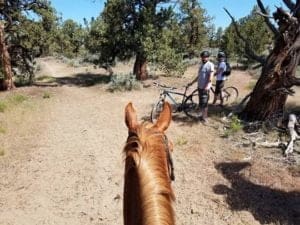
As the largest, slowest-to-maneuver and (usually) least-predictable creatures on the trail, horses get the right of way from both hikers and mountain bikers. If you’re sharing the trail with equestrians, give them as wide a berth as possible and make sure not to make abrupt movements as they pass and talk calmly when approaching to avoid startling the animal.
If you’re on a narrow trail and horses (or mules) are passing, get off the trail on the downhill side as they trot by. Horses are more likely to run uphill than downhill when spooked, and you definitely don’t want to be in the path of a spooked horse.
Hikers & Horses
Hikers & Hikers
Who has right-of-way?
Uphill hikers have the right of way
Why?
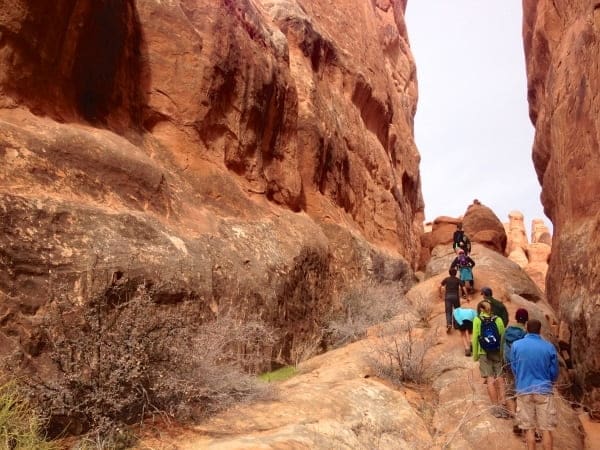
It seems that many hikers—even experienced ones—may not know or always remember this, but hikers going uphill have the right of way. This is because in general hikers heading up an incline have a smaller field of vision and may also be in that “hiking rhythm” zone and not in the mood to break their pace. Often an uphill hiker may let others come downhill while they take a breather, but remember that’s the uphill hiker’s call.
If you’re about to pass another hiker from behind, a simple “hello” is often the best way to announce your presence. Remember, many of us can zone out on those long, steep inclines! When passing, always stay on the trail to reduce erosion.
Trail etiquette is even more important when you’re hiking in a group. Always hike single-file, never taking up more than half the trail space, and stay on the trail itself. Over time, those off-trail boot prints can badly erode switchbacks and destroy drainage diversions. When a group meets a single hiker, it’s generally preferable for the single hiker to yield and step safely to the side.
Remember, when in doubt, just treat other hikers, bikers and equestrians the same way you’d treat the trail itself—with respect. Then get back to enjoying that solitude.
Final thoughts and additional resources
Whether you’re out for solitude, fitness, or fun, trail etiquette is about creating a better experience for everyone. Respect nature. Respect others. And enjoy the journey.